
Short answer: dry fogging can treat spores in the air and on exposed surfaces, but it does not remove mold growing inside walls or materials. It works best as a final step after mold is removed and the moisture is fixed.
What dry fogging is
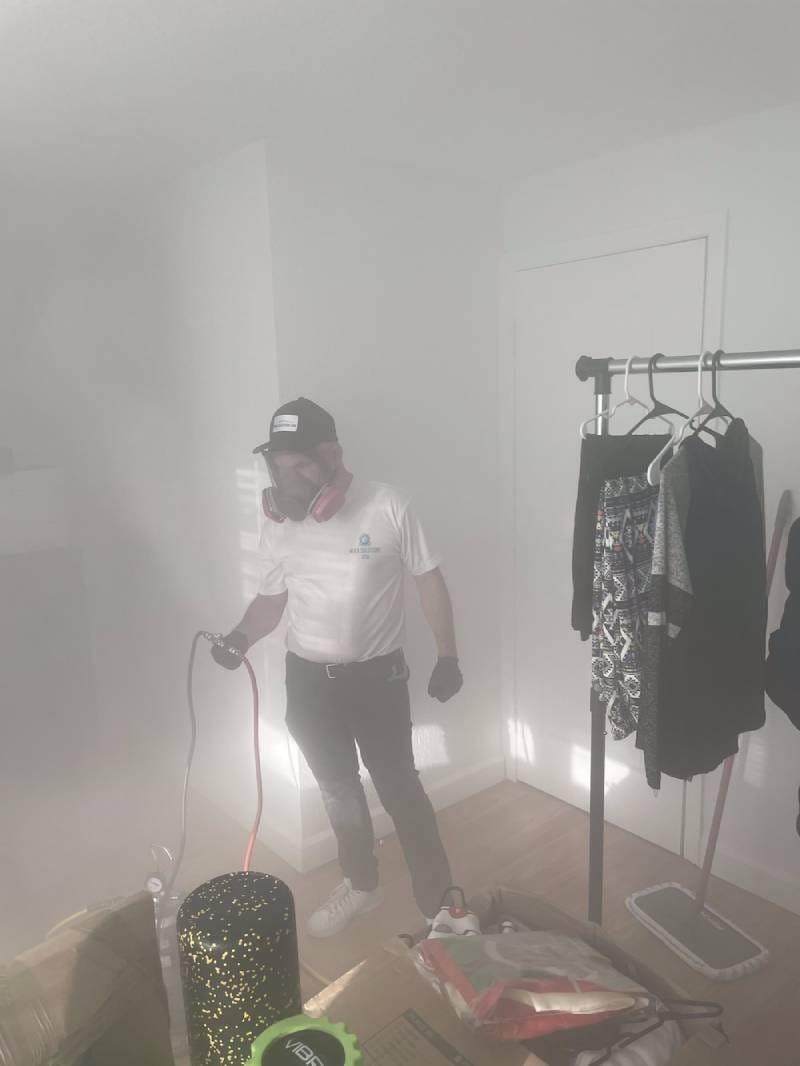
Dry fogging fills a room or a whole home with a very fine mist of cleaning product. The droplets are so small that they float in the air and reach corners, closets and spaces a cloth cannot. Because the mist is so fine, it settles without soaking furniture, floors or electronics.
What it can do
- Treat airborne spores and the surfaces they settle on, in every room at once
- Reach hidden corners, the tops of cabinets and the inside of closets
- Treat a home without moving your furniture and electronics out
- Help a home smell and feel fresh after the mold work is done
What it cannot do
- Remove mold growing inside drywall, under floors or in insulation
- Fix the leak, humidity or water damage that let mold grow
- Replace removing moldy materials that are too damaged to clean
- Stop mold from coming back if the moisture problem is still there
Why fogging alone is not remediation
Mold needs moisture to grow. If the water source is not fixed, mold returns no matter how many times a home is treated. The EPA also points out that killing mold is not enough. Dead mold can still cause allergic reactions, so moldy material has to be physically removed, not just sprayed.
That is why a fog-only service is a red flag. Real remediation finds the water, contains the area, removes the moldy materials, cleans, dries and then checks the result. Learn more in Mold Removal vs. Mold Remediation.
How we use Atomized Sanitization
Atomized Sanitization is our dry fogging process, and we use it as one step of mold remediation, never as a stand-alone fix. First the mold source is removed and the moisture problem is fixed. Then we fog the whole home with EPA-registered products that are non-toxic and leave no residue. Your contents stay in place, and most families are back home 2 to 3 hours after treatment. We only call a job done when an independent lab confirms the home passes.
For the spores and fine dust left on surfaces and belongings, see small particle cleaning. Cleaning belongings after mold? See How to Clean Your Belongings After Mold.
FAQ
It can treat spores in the air and on exposed surfaces. It does not remove mold growing inside walls or materials, so it is a final step after the mold is removed and the moisture is fixed.
Our Atomized Sanitization uses EPA-registered products that are non-toxic and leave no residue. Most families are back home 2 to 3 hours after treatment.
No. Furniture and electronics stay in place during our Atomized Sanitization.
No. Fogging does not fix the water problem or remove moldy materials. Use it after remediation, not instead of it.